Some games stay in your memory because they were polished. Others stay because they were pure fun. For me, Total Overdose belongs in the second group.
I still remember first playing this game on a friend's PC and instantly wanting to play it properly myself. When I finally got that chance, it became one of my favorite parts of childhood gaming.
I still remember loading it up and immediately understanding what kind of game it wanted to be: loud, messy, stylish, and completely unafraid to look ridiculous for the sake of fun.
Why it felt different in that PS2-era action crowd
Back then, a lot of us were bouncing between GTA-style sandboxes, Max Payne gunfights, and arcade action games. Total Overdose: A Gunslinger's Tale in Mexico (2005) landed in that same neighborhood, but it did not try to be the most realistic or most cinematic game on the shelf.
It felt like it wanted one thing above all else: keep the player entertained.
That design choice is exactly why I still remember it.
Stylish gunplay and stunt chaos were the real hook
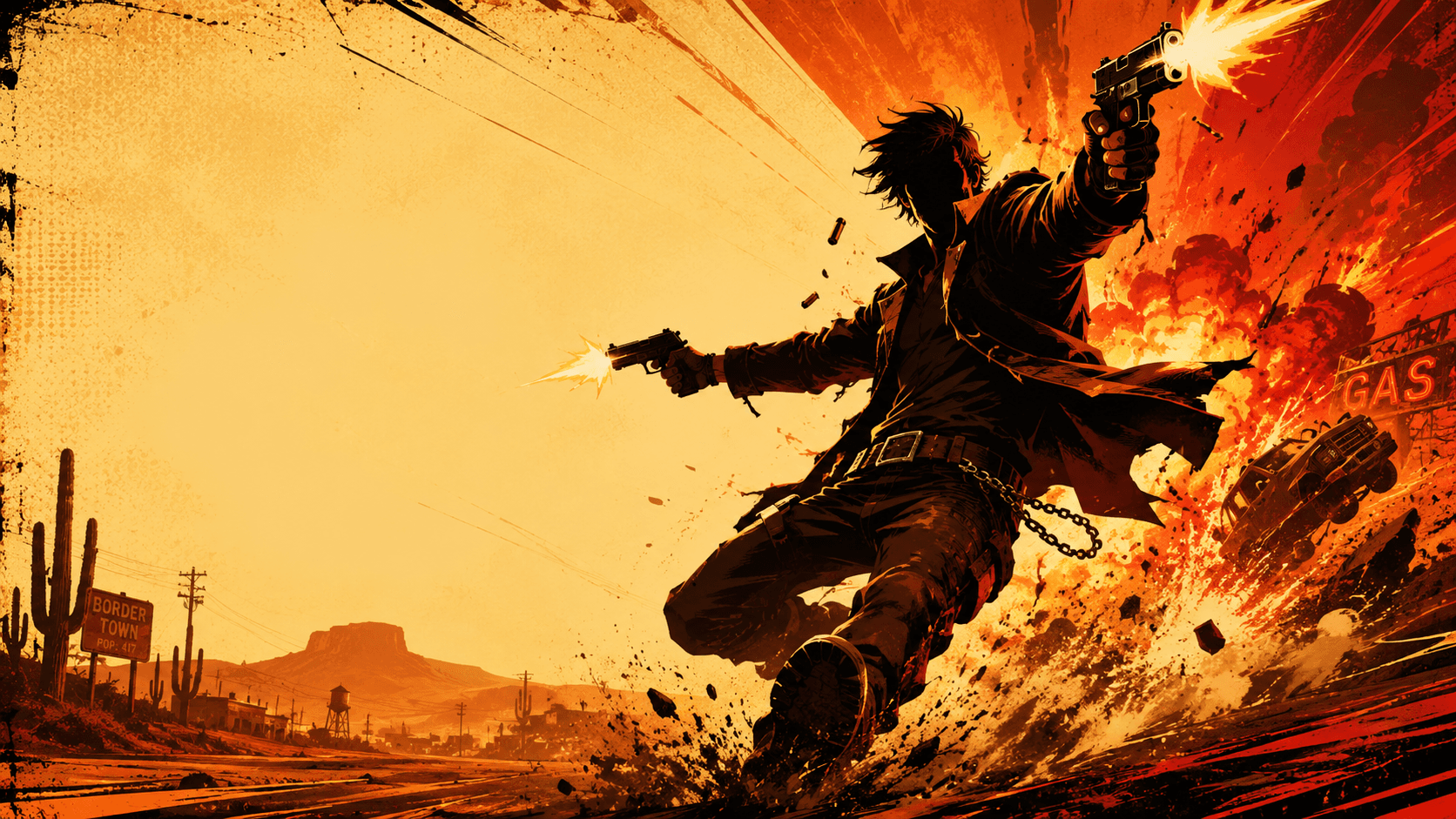
The combat loop was built around momentum. You were not just shooting enemies; you were trying to look cool while doing it. Diving, chaining kills, using over-the-top special moves, and turning fights into mini action scenes gave it a strong identity.
Even when missions were simple on paper, the moment-to-moment gameplay stayed energetic because the systems pushed you to improvise. One run could be sloppy and frantic; the next could feel like a perfectly timed action sequence.
That "playground chaos" quality is what made the game stick with me more than some objectively better-produced titles from the same era.
I still remember the guitar gun madness more than anything else, and it felt incredible every time. The slow-motion dives, wall dives, and those moments where you could jump out of a car and keep shooting in slow motion made the whole experience feel wild in the best way.
The humor and arcade energy gave it personality
The tone mattered a lot. Total Overdose had a playful, exaggerated attitude that separated it from games trying to be dark and serious. It leaned into absurdity, and that made the world feel less like a strict simulation and more like a stage for wild set pieces.
That attitude also made failure less frustrating. If a sequence went wrong, the game still felt entertaining, so retrying did not feel like a chore.
It absolutely had rough edges
This is also where honesty matters: the game was not flawless.
There was jank. Some mission beats felt repetitive. Certain systems were less refined than bigger-budget competitors. If someone expected a tightly tuned prestige action game, I can understand why it did not fully click.
But for players who valued style, speed, and personality over polish, those rough edges were easier to forgive.
Why it lived in the shadow of bigger names
It released in a period crowded with major franchises and louder marketing. Games with bigger budgets naturally dominated conversation, and Total Overdose became one of those titles people discovered through word of mouth instead of headlines.
That is usually how cult favorites are born: strong core fun, uneven execution, and not enough mainstream spotlight at release.
Why it still deserves to be remembered
When I revisit old PS2-era action games, I notice how many of them were technically competent but emotionally forgettable. Total Overdose is the opposite. It may not be the most polished game of its generation, but it has a distinct voice and a fun-first design that still feels refreshing.
I would call it an underrated memory rather than an undisputed classic, and that is exactly why it matters.
Final personal verdict
This game has been one of my childhood favorites. It may not be technically perfect, but if you played it at the right time, you already know why it still feels like a masterpiece.